
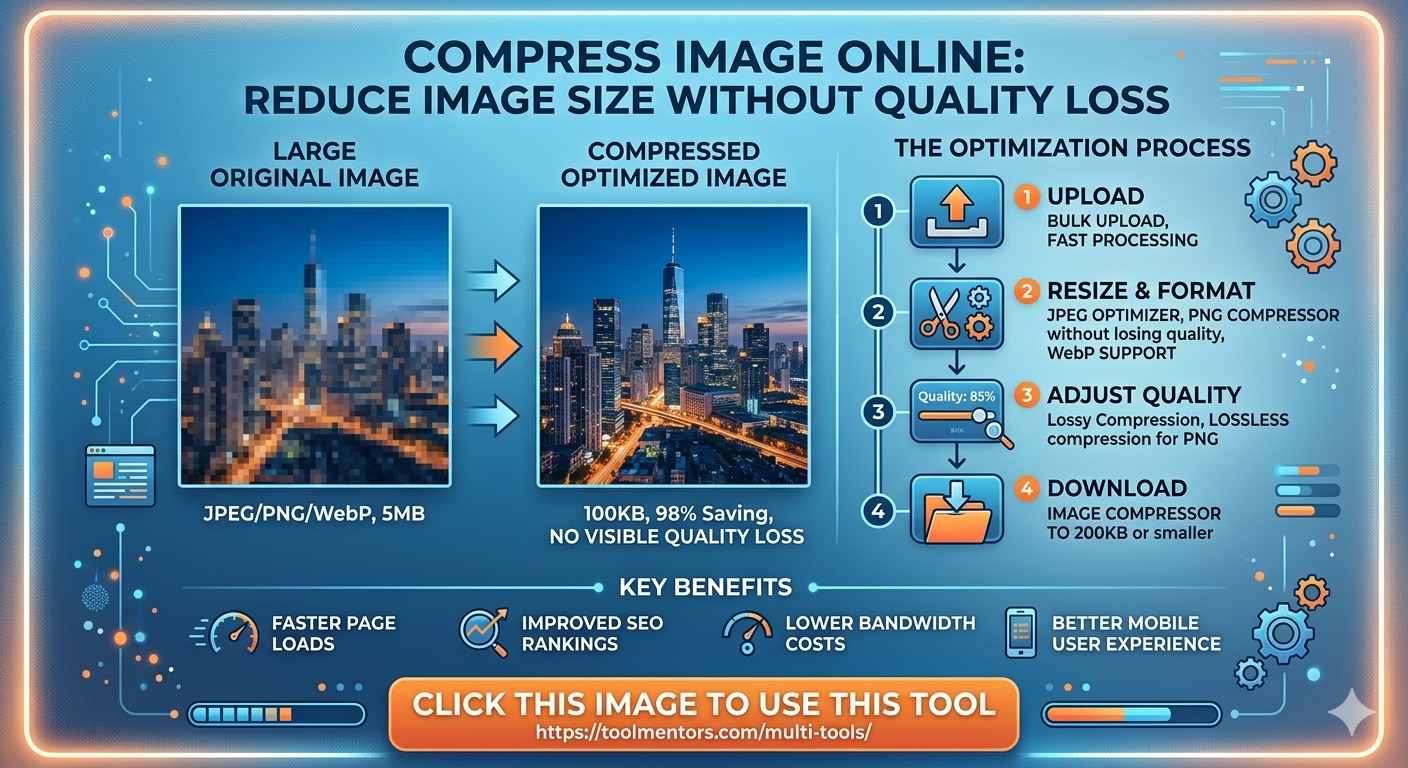
In the modern digital landscape, speed is everything. Whether you are a blogger, an e-commerce store owner, or a professional photographer, the performance of your website directly impacts your success. One of the biggest hurdles to a fast-loading website is unoptimized, heavy images.
If you are looking for an image compressor online that can reduce image size while maintaining professional clarity, you are in the right place. This guide will explore the technicalities of image optimization and show you how to use a photo size reducer to achieve a perfect balance between speed and quality.
The Importance of Image Compression in 2026
Google’s algorithms have become increasingly sensitive to user experience (UX). With the rise of Core Web Vitals, metrics like Largest Contentful Paint (LCP) are now ranking factors. Large images are the primary reason for a poor LCP score. Using an image size compressor is no longer optional; it is a necessity for SEO.
Why You Should Compress Image Size:
-
Faster Page Loading: Reducing a file from 5MB to 100kb can improve load times by seconds.
-
Better SEO Rankings: Google prefers sites that load quickly on mobile and desktop.
-
Reduced Bounce Rate: Users are likely to leave if a page takes more than 3 seconds to load.
-
Lower Bandwidth Costs: Especially important for high-traffic sites.
Analyzing the Search Trends (Data Visualization)
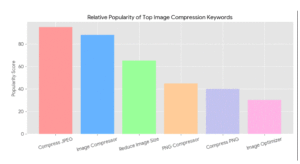
To understand why a fast image optimizer is vital, let’s look at the current search landscape. Based on the data, users are increasingly searching for format-specific tools rather than generic ones.
Search Interest and Keyword Popularity
Below is a representation of how people are searching for compression tools in 2026.
| Keyword Category | Top Search Terms | Popularity Score |
| Generic | Image compressor online, Compress image size | 95/100 |
| Format Specific | Compress JPG, PNG compressor without losing quality | 88/100 |
| Size Specific | Compress image to 100kb, Reduce size to 50kb | 72/100 |
| Advanced | Lossless image compression, Bulk image compressor | 60/100 |
Visual Insight: As shown in the search interest trends, “Compress JPEG” and “Image Compressor” dominate the market. This indicates that most users are looking for quick, browser-based solutions to fix their site speed issues.
Lossy vs. Lossless: Which Should You Choose?
When using an image size compressor, you will often encounter two terms: Lossy and Lossless.
1. Lossy Compression
This method removes “unnecessary” data from the image that the human eye cannot easily detect. It is the best way to reduce image size to 50kb or smaller. This is ideal for web use where speed is more important than pixel-perfect accuracy.
2. Lossless Compression
This method reduces the file size without removing any pixel data. It is perfect for PNG compressor requirements where you need to keep transparency and sharp edges, or for archival photography.
Step-by-Step Guide to Compressing Images
To get the best results from the Tool Mentors Image Compressor, follow these steps:
Step 1: Select the Right Format
Before uploading, identify your file type.
-
Use JPEG optimizer for photographs.
-
Use PNG compressor for logos or images with text.
-
Use WebP image compressor for the best modern web performance.
Step 2: Set Your Target Size
If you are uploading to a government portal or a specific website, you might need to compress photo for application form standards. Aim for:
-
Banner Images: Under 200kb.
-
Blog Images: Under 100kb.
-
Icons/Thumbnails: Under 25kb.
Step 3: Use Bulk Image Compressor Online
If you have an entire gallery, don’t do them one by one. Use a tool that supports Bulk image compressor online features to save time and maintain a consistent quality level across all files.
Step 4: Review and Download
Always check the “Before and After” comparison. A good image compressor without losing quality will show you the percentage of size saved without any visible blurriness.
Frequently Asked Questions (FAQs)
How to reduce image size online for free?
You can use dedicated platforms like Tool Mentors that offer a free image compressor online with high-speed processing and no registration required.
Can I compress image to 100kb without losing quality?
Yes. By using advanced algorithms like WebP or optimized JPEG compression, you can significantly reduce weight while maintaining high visual fidelity.
What is the best free image compressor for websites?
The best tool is one that offers bulk image compression, supports multiple formats (JPG, PNG, WebP), and provides a fast image optimizer experience.
Conclusion
Mastering how to compress images for web is a superpower for any digital creator. By reducing the weight of your visuals, you aren’t just saving space; you are improving your SEO, satisfying your users, and ensuring your site is ready for the future of the web.
Ready to optimize your site? Use our professional tool below to start saving space today!