
Have you ever felt a sudden flutter, a skipped beat, or a hard thud in your chest after a rough, sleepless night? If so, you might be experiencing Premature Ventricular Contractions (PVCs).
While PVCs are incredibly common and usually harmless, experiencing them frequently can be unsettling. A major question many people ask is: Can a lack of sleep cause PVCs?
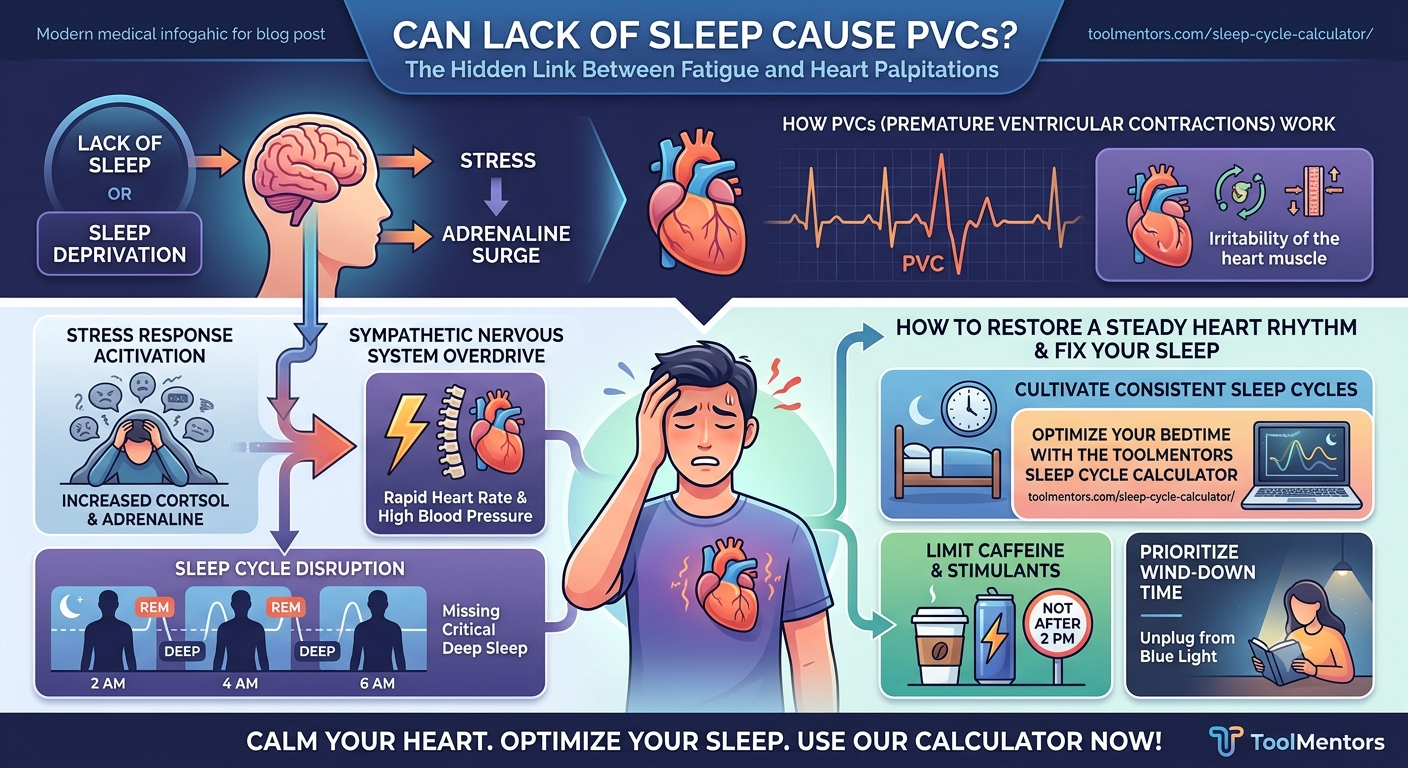
The short answer is yes. Sleep deprivation is a powerful trigger that can directly disrupt your heart’s natural rhythm. Here is a breakdown of exactly how sleep debt impacts your heart and how you can fix it.
The Anatomy of a Heart Palpitation: What is a PVC?
Before looking at the sleep connection, it helps to understand what is happening inside the chest. A PVC is an extra heartbeat that begins in one of the heart’s lower pumping chambers (the ventricles). This extra beat disrupts your regular heart rhythm, often making it feel like your heart skipped a beat or flip-flopped.
How Sleep Deprivation Triggers PVCs
When you do not get enough rest, your body doesn’t just feel tired—it enters a state of physiological stress. This triggers a chain reaction that directly affects your cardiac electrical system through three primary pathways:
1. Sympathetic Nervous System Overdrive
When you are sleep-deprived, your body activates its “fight-or-flight” response (the sympathetic nervous system). This causes a surge in stress hormones like adrenaline and cortisol. These hormones increase your heart rate and blood pressure, making the heart muscle hyper-irritable and significantly more prone to misfiring with extra beats.
2. Disrupted Sleep Architecture
It is not just about the total hours of sleep; it is about the quality of your sleep cycles. Missing out on critical Deep Sleep and REM (Rapid Eye Movement) phases deprives your cardiovascular system of its essential nightly reset period, during which blood pressure and heart rate naturally lower (a process called “dipping”).
3. Increased Sensitivity to Other Triggers
When exhausted, people naturally reach for quick energy fixes. Consuming excess caffeine, energy drinks, or sugary foods on a low-energy day acts as a double stimulant on an already stressed heart, creating the perfect storm for frequent PVCs.
How to Stop Sleep-Induced PVCs
If your heart flutters are tied to poor rest, fixing your sleep schedule is the most effective way to find relief.
-
Audit Your Sleep Cycles: Don’t just focus on standard bedtime hours; focus on waking up at the end of a complete sleep cycle to avoid morning fatigue and stress. You can map out your ideal bedtime and wake times using the free ToolMentors Sleep Cycle Calculator to optimize your rest perfectly.
-
Limit Stimulants: Cut off caffeine consumption at least 6 hours before you plan to go to sleep.
-
Create a Wind-Down Routine: Dedicate 30 minutes before bed to disconnecting from blue screens (phones/laptops) to allow natural melatonin production to kick in.
When to See a Doctor: While occasional PVCs caused by a poor night’s rest are generally benign, you should always consult a healthcare professional or cardiologist if your palpitations are frequent, prolonged, or accompanied by dizziness, chest pain, or shortness of breath.
Key Takeaway
Your heart thrives on predictability and rest. If you are noticing more flutters than usual, check your sleep habits first. Aligning your rest with natural sleep cycles is one of the easiest, non-invasive ways to calm an irritable heart and restore a steady rhythm.