
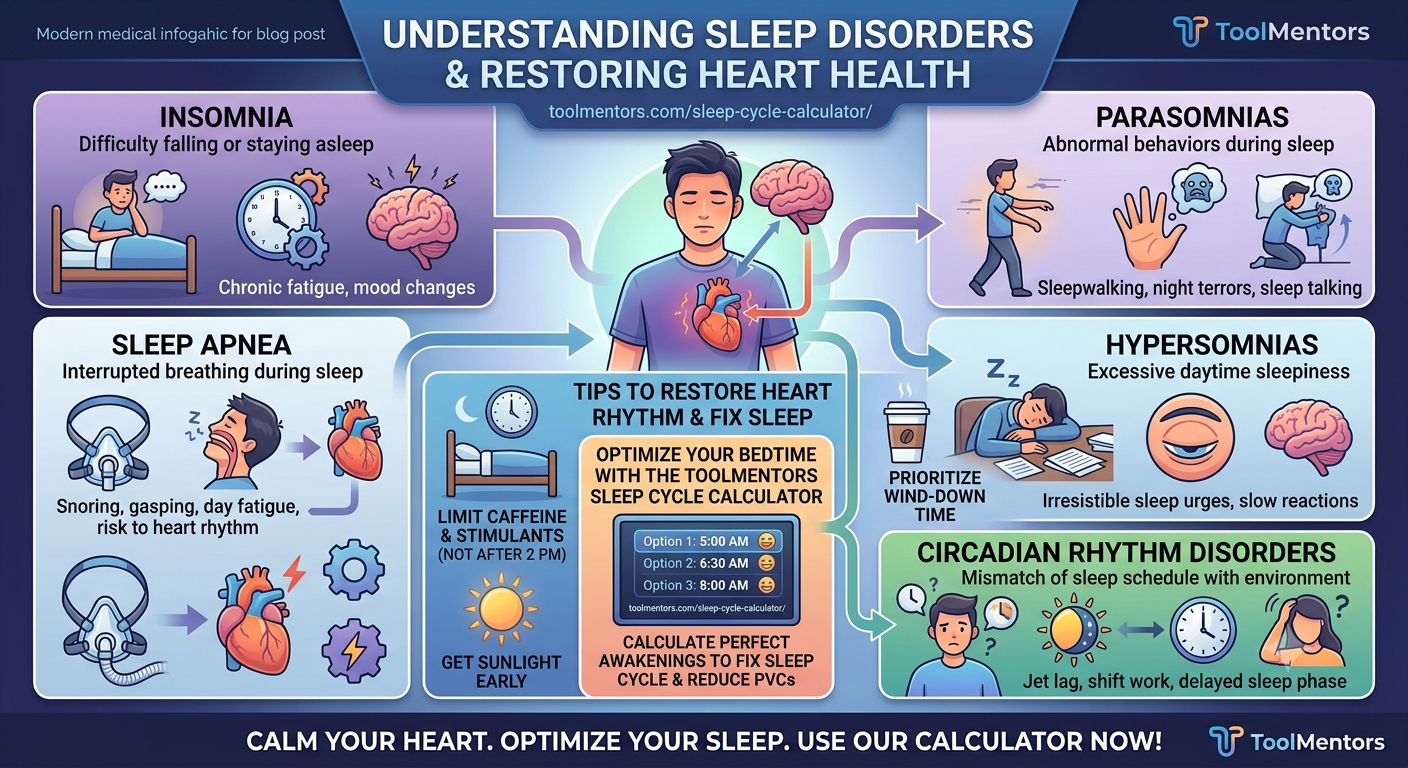
Getting a good night’s rest is just as important for your health as healthy eating and exercise. Yet, millions of people struggle to get quality rest due to underlying sleep disturbances. If you find yourself constantly fatigued, waking up throughout the night, or feeling unrefreshed, you might be dealing with a sleep disorder.
To help you understand what might be disrupting your rest, here is a complete breakdown of the main types of sleep disorders, their symptoms, and how you can manage them.
The 5 Major Types of Sleep Disorders
Sleep disorders are broadly categorized based on how they affect your ability to fall asleep, stay asleep, or maintain a regular schedule.
1. Insomnia
Insomnia is the most common sleep disorder. It is characterized by a persistent difficulty falling asleep, staying asleep, or waking up too early and being unable to get back to sleep.
-
Acute Insomnia: Short-term, often caused by life stress or travel.
-
Chronic Insomnia: Lasts for three nights a week for three months or longer.
2. Sleep Apnea (Sleep-Related Breathing Disorders)
Sleep Apnea is a potentially serious condition where your breathing repeatedly stops and starts while you sleep.
-
Obstructive Sleep Apnea (OSA): The throat muscles relax and block the airway (often causing loud snoring).
-
Central Sleep Apnea (CSA): The brain fails to send proper signals to the muscles that control breathing.
3. Parasomnias
Parasomnias are disruptive sleep disorders that involve abnormal behaviors, movements, or perceptions that occur while falling asleep, during sleep, or when waking up. Common examples include:
-
Sleepwalking (Somnambulism)
-
Sleep talking
-
Night terrors
-
REM sleep behavior disorder (physically acting out vivid dreams)
4. Hypersomnias (e.g., Narcolepsy)
While insomnia leaves you desperate for sleep, hypersomnias cause excessive daytime sleepiness despite getting a normal amount of sleep. Narcolepsy is a well-known type where individuals experience sudden, uncontrollable urges to sleep during the day, sometimes accompanied by a sudden loss of muscle control (cataplexy).
5. Circadian Rhythm Sleep-Wake Disorders
Your body has a natural 24-hour internal clock, known as the circadian rhythm, which signals when it’s time to sleep and wake. When this internal clock is out of alignment with your environment, it causes a circadian rhythm disorder. Common causes include:
-
Shift Work Disorder: Struggling to sleep due to non-traditional work hours.
-
Jet Lag: Temporary disruption from traveling across time zones.
-
Delayed Sleep Phase Syndrome: A natural tendency to go to sleep and wake up much later than typical societal norms.
How to Identify and Manage Sleep Disruptions
| Disorder Type | Primary Clue | Potential First Step |
| Insomnia | Can’t fall or stay asleep | Improve sleep hygiene & optimize timing |
| Sleep Apnea | Loud snoring, gasping for air | Medical evaluation / CPAP therapy |
| Circadian Issues | Misaligned internal clock | Light therapy & strict cycle scheduling |
The Secret Weapon: Optimizing Your Sleep Cycles
Sometimes, feeling exhausted isn’t due to a clinical disorder, but simply because you are waking up at the wrong time. Our sleep is divided into 90-minute cycles consisting of Light, Deep, and REM sleep. Interrupted deep sleep leaves you feeling groggy, mimicking the fatigue of a sleep disorder.
Take Control of Your Rest: Before worrying about a chronic condition, try aligning your bedtime with your natural biology. You can easily calculate exactly when to go to bed or wake up based on natural 90-minute intervals using the free ToolMentors Sleep Cycle Calculator. It ensures you wake up at the end of a cycle, leaving you feeling fully refreshed.
When to Consult a Specialist
If optimizing your sleep schedule, cutting back on caffeine, and fixing your environment doesn’t improve your daytime fatigue, it is time to seek professional help. Consider consulting a sleep specialist or undergoing a sleep study (polysomnography) if you experience:
-
Loud, chronic snoring or choking sounds during sleep.
-
Inability to stay awake during crucial daytime activities (like driving).
-
Chronic difficulty falling asleep that lasts longer than a month.