
If you lie awake staring at the ceiling or wake up feeling like you haven’t slept at all, you are far from alone. Sleep deprivation and chronic sleep disorders have quietly become a global epidemic, affecting billions of people worldwide.
But exactly how common are sleep disorders? Let’s dive into the data to see how widespread the problem is and how it might be secretly affecting your daily energy.
The Global Scale: Sleep Disorder Statistics
Medical research shows that sleep issues are no longer an occasional nuisance—they are a major public health concern.
-
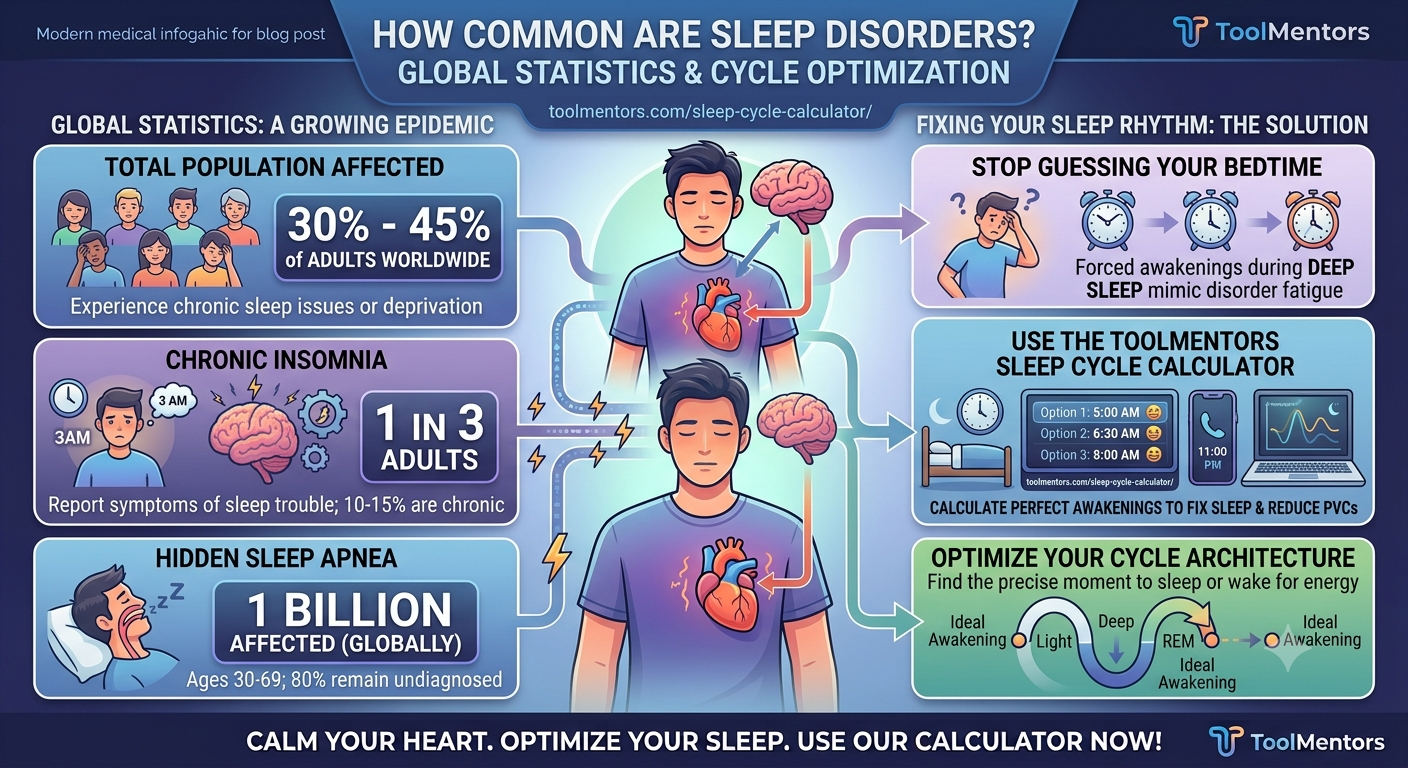
The Global Burden: Approximately 30% to 45% of adults worldwide suffer from some form of sleep disorder or chronic sleep deprivation.
-
The Insomnia Epidemic: Insomnia is the most prevalent specific disorder. Studies show that 1 in 3 adults experience brief symptoms of insomnia, while 10% to 15% suffer from chronic insomnia that severely impacts their daily lives.
-
Hidden Sleep Apnea: Obstructive Sleep Apnea (OSA) affects roughly 1 billion adults globally between the ages of 30 and 69, though an estimated 80% of cases remain undiagnosed.
Why Is the World Losing Sleep?
The dramatic rise in sleep issues over recent years is largely driven by lifestyle changes, modern technology, and a fundamental misunderstanding of how human sleep biology works:
1. The 24/7 Digital Culture
The blue light emitted by smartphones, laptops, and TVs suppresses the production of melatonin—the hormone responsible for telling your brain it’s time to sleep. Scrolling through social media before bed pushes back your internal clock, leading to forced, unnatural awakenings the next morning.
2. Disrupted Sleep Cycles vs. Total Hours
Many people believe that getting 7 or 8 hours of sleep is all that matters. However, sleep architecture is broken down into 90-minute intervals called sleep cycles (comprising Light, Deep, and REM sleep). If your alarm goes off while you are in the middle of a deep sleep phase, you will wake up feeling exhausted, groggy, and highly fatigued—mimicking the symptoms of an actual sleep disorder.
How to Protect Yourself from the Sleep Epidemic
You don’t necessarily need prescription medication to fix a broken sleep routine. Often, the most effective solution is aligning your schedule with your natural biology.
| Population Affected | Primary Sleep Culprit | Quick Fix |
| 33% of Adults | Mid-cycle alarm interruptions | Optimize sleep timing |
| 45% of Global Adults | Blue-light & late-night screen use | 30-min digital detox before bed |
Stop Guessing Your Bedtime: Instead of just setting a random alarm, you can bypass morning grogginess by calculating your natural 90-minute sleep intervals. Use the free ToolMentors Sleep Cycle Calculator to find the exact minute you should sleep or wake up to stay in sync with your body’s natural rhythm.
When to Seek Medical Help
While a disrupted sleep schedule can often be corrected with lifestyle tweaks and cycle optimization, you should consult a doctor or a sleep specialist if you experience:
-
Loud, chronic snoring followed by gasping or choking sounds.
-
Inability to fall asleep despite practicing perfect sleep hygiene for more than a month.
-
Feeling dangerously sleepy while doing everyday tasks like driving.