We have all been there: tossing and turning at 3:00 AM, unable to drift off, or sitting exhausted during a mid-day slump. You close your eyes, relax your body, and clear your mind—but you never actually fall asleep.
This leads to a very common question: Does closing my eyes count as sleep, and does it actually refresh my body?
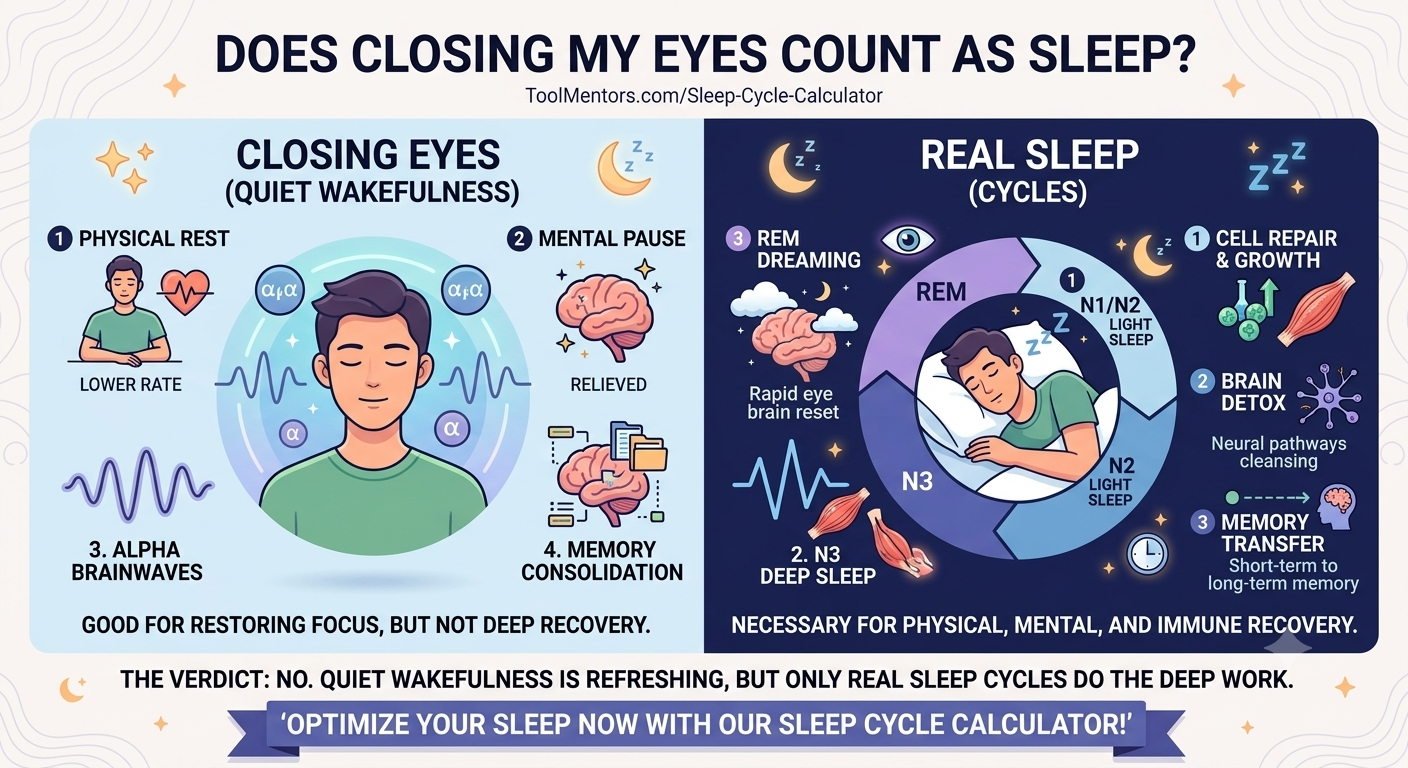
The short answer is no, closing your eyes does not count as actual sleep. However, science shows that it triggers a state called “Quiet Wakefulness”, which still offers powerful mental and physical benefits.
Let’s dive deep into the differences between resting awake and true sleep, and how you can optimize both.
The Science: Rest vs. True Sleep
When you lie down and close your eyes, your body feels relaxed, but your brain behavior is completely different from when you are asleep.
1. What Happens When You Just Close Your Eyes (Quiet Wakefulness)
The moment you close your eyes and shut out visual distractions, your brain drops its “fight-or-flight” state and begins producing Alpha brainwaves. This “relaxation rhythm” provides immediate benefits:
-
Reduces Physical Stress: Your blood pressure drops and your heart rate slows down.
-
Relieves Brain Strain: It gives your visual cortex a break, reducing mental fatigue and increasing alertness afterward.
-
Consolidates Short-Term Memory: Studies show that 15 minutes of closed-eye rest helps stabilize newly learned tasks or information.
2. What Happens Only When You Sleep
While quiet rest can relax your muscles, it cannot replace the physiological processes that happen during deep sleep (N3) and REM sleep cycles. Only true sleep can:
-
Flush Out Neurotoxins: Your brain physically cleanses itself of cellular waste (like beta-amyloid proteins).
-
Release Growth Hormones: This is vital for cell repair, muscle recovery, and immune system health.
-
Generate Delta Waves: These deep brainwaves are responsible for making you feel completely rejuvenated the next morning.
Rest vs. Sleep Comparison
| Feature | Closing Your Eyes (Rest) | True Sleep (Cycles) |
| Brainwave Type | Alpha Waves (Relaxation) | Theta, Delta, & REM Waves |
| Physical Muscle Relief | Yes ✅ | Yes ✅ |
| Cellular & Muscle Repair | Minimal ❌ | Maximum ✅ |
| Brain Detoxification | No ❌ | Yes ✅ |
| No-Grogginess Wakeup | Yes (Immediate Alertness) ✅ | Only if timed with a calculator ⏰ |
How to Turn “Quiet Wakefulness” Into Better Sleep
If you are lying in bed with your eyes closed because you can’t sleep, trying too hard can actually trigger anxiety, making sleep even more difficult.
Instead of stressing over the clock, follow this strategy:
-
Drop the Sleep Pressure: Accept that resting with your eyes closed is still doing your body good. This mind shift lowers your heart rate and often allows you to naturally slide into Stage 1 sleep without realizing it.
-
Follow the 20-Minute Rule: If you are still wide awake after 20 minutes, get out of bed. Sit in a dim room and read a book until you feel sleepy, then return to bed.
-
Time Your Recovery with a Calculator: When you finally feel ready to sleep, use the ToolMentors Sleep Cycle Calculator to figure out your exact wake-up window. Planning your rest in 90-minute blocks ensures that even if you get less sleep, you still wake up at the absolute perfect time.
Q: Is lying in bed with eyes closed better than no sleep?
A: Yes. Lying still with your eyes closed reduces cortisol (stress hormones), relaxes your muscles, and recharges mental focus. While it won’t replace a full night’s sleep, it is significantly better for your health than staying actively awake or staring at a screen.
Q: How do I know if I actually slept or just had my eyes closed?
A: This is called sleep state misperception. Many times, people drop into Stage 1 (light sleep) where their brain is technically sleeping, but they feel like they were awake the whole time. If time seemed to pass much faster than normal, you likely drifted off into light sleep.